Prescription Scuba Goggles: Ultimate Guide for Divers
Experiencing the underwater world in crisp, clear detail transforms every dive from a blurry adventure into an unforgettable visual experience. For the millions of divers who require vision correction, prescription scuba goggles offer a practical solution that eliminates the risks and inconveniences associated with wearing contact lenses underwater. Whether you're exploring coral reefs, investigating shipwrecks, or simply enjoying recreational snorkeling, having properly corrected vision ensures both safety and enjoyment beneath the surface.
Understanding Prescription Scuba Goggles
Prescription scuba goggles represent a specialized category of diving equipment designed specifically for individuals who need vision correction. Unlike standard diving masks, these customized solutions incorporate corrective lenses ground to match your exact prescription, providing the same clarity underwater that you experience with eyeglasses on land.
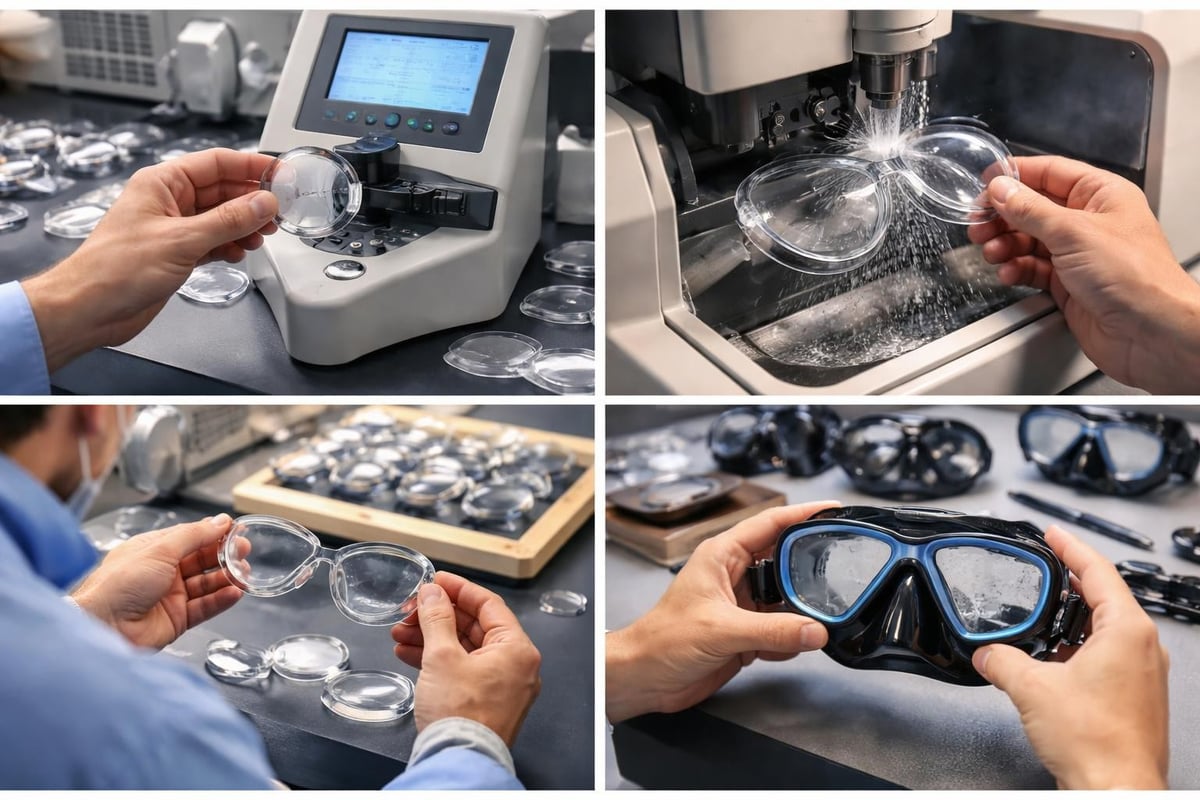
The technology behind prescription scuba goggles has advanced significantly over the past decade. Modern manufacturing techniques allow for precise lens grinding that accommodates complex prescriptions, including astigmatism correction and progressive lenses for divers who need both distance and near vision correction. High-quality optical glass remains the preferred material due to its superior clarity and scratch resistance, though some manufacturers also offer polycarbonate options for specific applications.
Key Differences from Standard Diving Masks
Standard diving masks feature a flat lens or dual lenses without any corrective properties. Prescription scuba goggles, however, integrate optical correction directly into the mask itself. This integration happens through several methods:
- Bonded prescription lenses permanently attached to the mask faceplate
- Drop-in lens inserts that fit behind the mask's existing lenses
- Complete custom masks manufactured with prescription lenses from the start
- Removable optical inserts secured with specialized mounting systems
Each approach offers distinct advantages depending on your prescription strength, budget, and diving frequency. SeaVision USA offers custom prescription dive masks manufactured in their optical laboratory, representing the premium end of the market with fully customized solutions.
Choosing the Right Prescription Scuba Goggles
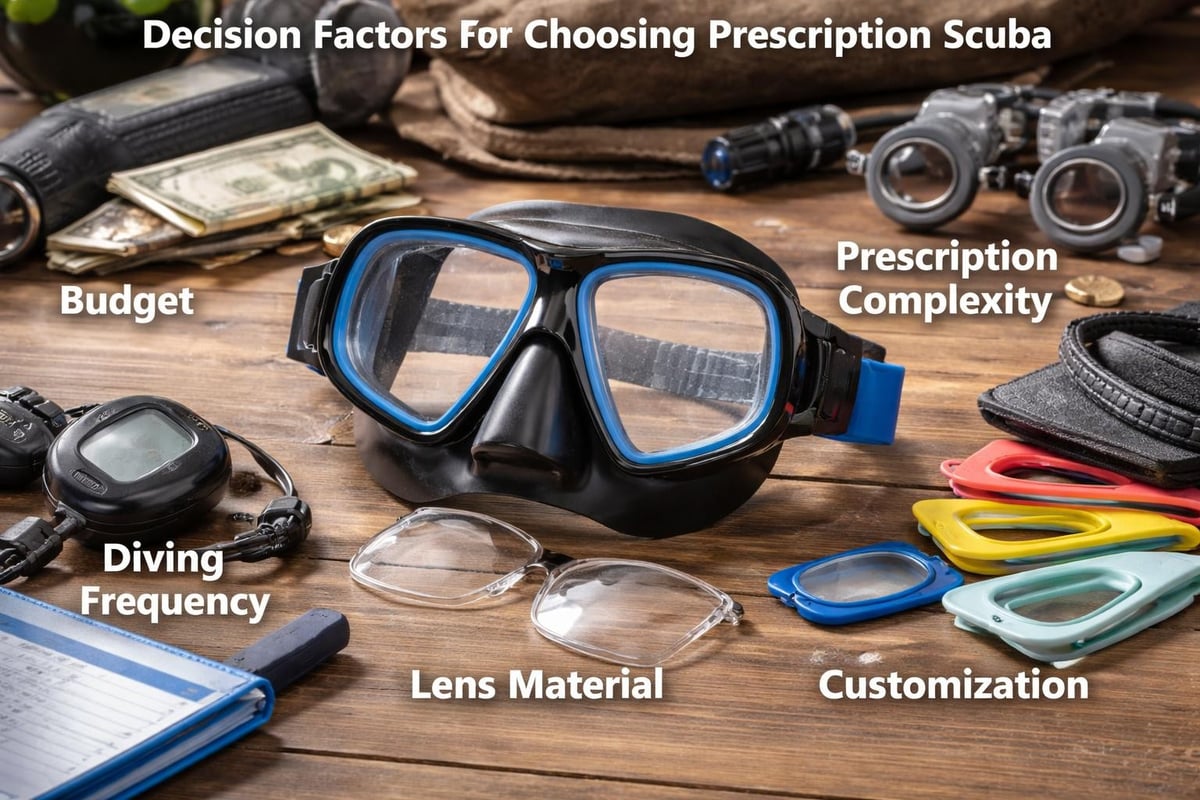
Selecting appropriate prescription scuba goggles requires careful consideration of multiple factors beyond simply knowing your eyeglass prescription. The underwater environment creates unique optical challenges that affect how you perceive objects and distances.
Water magnifies everything approximately 33% larger and 25% closer than it appears on land. This magnification effect means that your underwater prescription may differ slightly from your standard eyeglass prescription. Professional optical services that specialize in dive masks understand these nuances and can adjust your prescription accordingly.
Prescription Considerations
| Prescription Type | Typical Correction Range | Special Considerations |
|---|---|---|
| Nearsightedness | -1.00 to -8.00 diopters | Most common diving prescription |
| Farsightedness | +1.00 to +4.00 diopters | Less common but fully accommodated |
| Astigmatism | Up to -3.00 cylinder | Requires custom lens grinding |
| Presbyopia | +1.00 to +3.00 add power | Progressive or bifocal options available |
Your existing prescription serves as the starting point, but several adjustments may enhance underwater clarity. Many divers find that slightly reducing their correction by 0.25 to 0.50 diopters compensates for the water's magnification effect while maintaining sharp vision.
Lens Material Selection
The choice between glass and polycarbonate lenses significantly impacts your diving experience. Tempered glass lenses offer superior optical clarity and extreme scratch resistance, making them ideal for frequent divers who demand the best possible vision. These lenses maintain their clarity even after hundreds of dives and aggressive cleaning.
Polycarbonate lenses provide a lighter alternative with excellent impact resistance. While they scratch more easily than glass, proper care and storage extend their useful life considerably. Some specialty applications, such as prescription diving masks for teens, may benefit from the added safety of polycarbonate construction.
Customization Options and Advanced Features
Modern prescription scuba goggles offer remarkable customization possibilities that extend far beyond basic vision correction. Understanding these options helps you select features that match your specific diving style and visual requirements.
Progressive and Bifocal Solutions
Divers over 40 often experience presbyopia, the age-related loss of near focusing ability. This condition presents unique challenges underwater, where you need to read dive computers, check gauges, and examine marine life at various distances.
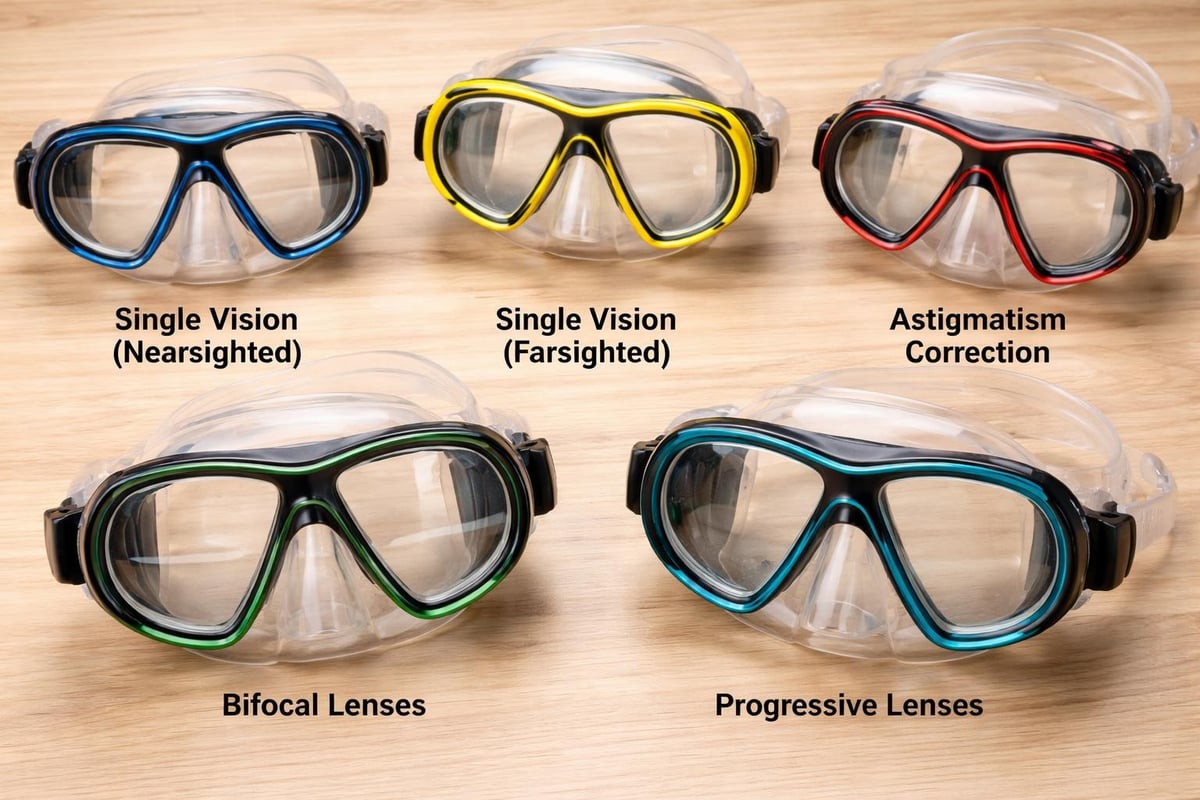
Progressive diving masks incorporate graduated lens powers that transition smoothly from distance correction in the upper portion to near correction in the lower section. This design allows natural eye movement without the visible line that characterizes traditional bifocals.
Bifocal prescription scuba goggles feature a distinct reading segment positioned in the lower lens area. While the visible line may seem less aesthetically pleasing, many experienced divers prefer bifocals for their wider reading zones and easier adaptation compared to progressives. The reading segment typically starts with a +1.50 to +2.50 add power, customized to your specific near vision needs.
Anti-Fog Treatments and Coatings
Fog formation represents one of the most frustrating challenges divers face. Temperature differences between your face and the surrounding water create condensation on the inner lens surface, obscuring vision at critical moments. Modern prescription scuba goggles combat this issue through several approaches:
- Permanent anti-fog coatings applied during manufacturing
- Hydrophilic treatments that spread moisture into an invisible film
- Factory-applied sacrificial coatings that require periodic reapplication
- Surface treatments compatible with traditional defog solutions
Quality manufacturers like See The Sea RX incorporate professional-grade anti-fog treatments that last for years with proper maintenance. However, even the best factory treatments benefit from pre-dive preparation using commercial defog solutions or the time-tested toothpaste method.
Fitting and Comfort Considerations
Proper fit determines both comfort during extended dives and the effectiveness of your prescription scuba goggles. An ill-fitting mask allows water intrusion, creates uncomfortable pressure points, and may compromise the optical benefits of your custom lenses.
Mask Volume and Design
Low-volume masks require less air for equalization and clear more quickly when flooded. However, they typically offer a smaller lens area that may limit peripheral vision. High-volume masks provide expansive fields of view but demand more effort to clear and equalize.
Skirt material and design directly affect comfort and seal quality. Medical-grade silicone remains the industry standard, offering flexibility, durability, and hypoallergenic properties. The skirt's edge where it contacts your face should feature a double seal or feathered edge that conforms to facial contours without excessive pressure.
Face Shape Compatibility
Different mask designs accommodate varying facial structures. Consider these fitting factors:
- Narrow faces benefit from low-profile designs with reduced width
- Wide faces require masks with extended skirt dimensions
- High cheekbones need masks with carefully designed skirt relief areas
- Close-set eyes work better with masks featuring narrow nose pockets
Professional fitting services, whether in-person or through detailed online questionnaires, help match your facial structure with compatible mask models before prescription lens installation. Scuba Vision specializes in manufacturing custom prescription lenses for various dive mask models, ensuring you can choose a mask that fits your face before adding optical correction.
Maintenance and Care Requirements
Prescription scuba goggles represent a significant investment that rewards proper maintenance with years of reliable service. Establishing consistent care routines protects both the optical quality and structural integrity of your equipment.
Cleaning Protocols
| Cleaning Step | Procedure | Frequency |
|---|---|---|
| Rinse | Fresh water soak for 10-15 minutes | After every dive |
| Wash | Mild dish soap with soft cloth | Weekly or after saltwater exposure |
| Inspect | Check seals, straps, and lens bonding | Before each dive trip |
| Deep Clean | Enzymatic cleaner for protein buildup | Monthly for frequent divers |
Never use abrasive cleaners, rough towels, or harsh chemicals on prescription scuba goggles. These substances damage anti-fog coatings, scratch lenses, and degrade silicone components. Store your mask in a protective case away from direct sunlight, as UV exposure deteriorates silicone and can affect lens coatings.
Handling Prescription Lens Inserts
For divers using removable prescription inserts rather than permanently bonded lenses, additional care considerations apply. Remove inserts after diving to allow complete drying of both the insert and mask interior. This prevents moisture accumulation that encourages mold growth and coating degradation.
Handle inserts by their frames rather than touching lens surfaces directly. Skin oils transfer easily and create stubborn films that reduce clarity and promote fogging. When traveling, pack inserts separately in rigid protective cases to prevent pressure damage from compressed luggage.
Cost Factors and Value Considerations
Understanding the pricing structure for prescription scuba goggles helps you make informed decisions that balance initial investment against long-term value and diving frequency.
Price Range Overview
Entry-level prescription scuba goggles with basic correction (nearsightedness or farsightedness only) typically start around $150-$200 for stock lens options. Custom ground lenses for astigmatism correction push prices into the $250-$400 range. Premium solutions with progressive lenses, specialized coatings, and high-end mask designs can exceed $500-$700.
These prices reflect the specialized nature of underwater optical correction. Unlike regular eyeglasses produced in massive quantities, prescription diving masks involve individual lens grinding, precise optical calculations accounting for underwater magnification, and specialized mounting techniques that ensure lenses remain secure under pressure.
Value extends beyond initial cost. Consider these factors when evaluating investment:
- Elimination of disposable contact lenses for diving (savings of $200-$400 annually)
- Reduced risk of eye infections from contaminated water exposure
- Enhanced safety through improved underwater visibility
- Longer equipment lifespan compared to replacing standard masks
- Ability to share mask base with different prescription inserts
Insurance and Warranty Coverage
Some vision insurance plans cover prescription scuba goggles as "specialty eyewear" or "protective eyewear." Contact your insurance provider with specific product information before purchase. Flexible Spending Accounts (FSAs) and Health Savings Accounts (HSAs) typically accept prescription diving equipment as qualified medical expenses.
Manufacturer warranties vary significantly. Quality producers like those offering custom prescription options through Oceans Optics often provide lens replacement guarantees if prescription errors occur or manufacturing defects appear. Lifetime warranties on craftsmanship demonstrate manufacturer confidence in their production processes.
Special Applications and Unique Requirements
Different diving activities place varying demands on prescription scuba goggles. Understanding these specialized applications helps you select equipment optimized for your primary diving pursuits.
Freediving and Apnea Considerations
Freedivers require ultra-low-volume masks that minimize air space and reduce equalization demands during rapid descents. Apnea-specific prescription masks feature extremely close-fitting designs with prescription lenses positioned as near to the eyes as possible. This configuration reduces internal volume to as little as 60-80ml compared to 150-200ml for standard recreational masks.
The reduced volume becomes critical during deep freedives where mask squeeze intensifies. Freedivers cannot add air to their masks as easily as scuba divers, making low-volume designs essential for comfort and safety. Prescription options for these specialized masks often require custom lens grinding due to the unique internal geometry.
Technical Diving Requirements
Technical divers operating at extreme depths or in overhead environments demand exceptional optical quality and equipment reliability. Prescription scuba goggles for technical diving typically incorporate:
- High-grade optical glass resistant to pressure distortion
- Redundant strap systems with backup attachment points
- Wide fields of view for improved situational awareness in confined spaces
- Compatibility with full-face masks for extended bottom times
Some technical divers opt for prescription inserts compatible with commercial diving helmets or full-face regulators. These specialized applications require working with manufacturers experienced in professional diving optics.
Youth and Junior Divers
Young divers present unique fitting challenges due to smaller facial structures and ongoing vision changes. Prescription diving masks for kids must balance proper optical correction with the reality that children's prescriptions often change annually.
Cost-effective approaches include:
- Slightly under-correcting prescriptions to extend usability as vision changes
- Using modular insert systems that allow lens replacement without purchasing complete new masks
- Selecting masks with adjustable features that accommodate facial growth
- Considering rental or trial programs for rapidly growing children
Many families find success with prescription reader diving masks for younger divers who primarily need close-up vision for examining marine life and reading dive computers.
Integration with Modern Diving Technology
Contemporary diving increasingly relies on technology that demands clear near and intermediate vision. Prescription scuba goggles must support interaction with dive computers, underwater cameras, and communication devices.
Dive Computer Compatibility
Wrist-mounted dive computers typically display information at a distance of 18-24 inches from your eyes. This intermediate distance poses challenges for divers with presbyopia wearing single-vision distance correction. Reading segments in bifocal prescription scuba goggles must be positioned to accommodate comfortable viewing angles for wrist computers without requiring awkward head tilting.
Console-mounted computers mounted on gauges present different challenges. These devices display closer to your body, often requiring stronger near correction. Divers relying heavily on console computers benefit from progressive lenses that smoothly transition from distance to near correction zones.
Underwater Photography Considerations
Serious underwater photographers spend significant time viewing camera LCD screens and adjusting small controls. Standard bifocal reading segments positioned in the lower lens area work well for checking camera settings and reviewing images. However, photographers who shoot while looking upward (photographing subjects above them) may find this placement less optimal.
Some photographers working with prescription scuba goggles request custom reading segment placement to match their typical shooting angles and camera positions. Professional optical labs accommodate these special requests, though they require careful discussion of shooting habits and camera configurations.
Making the Purchase Decision
Purchasing prescription scuba goggles involves coordinating prescription information, mask selection, and lens specifications. Following a systematic approach ensures satisfaction with your finished equipment.
Obtaining Accurate Prescriptions
Schedule a comprehensive eye examination that specifically measures for diving use. Inform your optometrist about your diving activities and request pupillary distance (PD) measurements, cylinder axis for astigmatism (if applicable), and specific recommendations for near vision add power if needed.
Current prescriptions older than two years may no longer provide optimal correction. Vision changes gradually, and outdated prescriptions compromise the benefits of custom prescription scuba goggles. Most optical professionals recommend annual eye examinations for adults over 40 and biennial examinations for younger individuals.
Working with Specialty Manufacturers
Quality prescription scuba goggle manufacturers provide detailed ordering processes that capture all necessary information. Expect to provide:
- Complete prescription details including sphere, cylinder, axis, and add power
- Pupillary distance measurements
- Mask model selection or dimensional specifications
- Lens material preferences
- Coating and treatment selections
- Special requirements or modifications
Reputable manufacturers often offer consultation services to discuss prescription interpretation, mask compatibility, and customization options. Take advantage of these services to ensure your finished product meets expectations.
Prescription scuba goggles transform underwater experiences by providing the clear vision essential for safety and enjoyment. Whether you need simple nearsighted correction or complex progressive lenses for presbyopia, modern optical technology delivers solutions that perform reliably in demanding underwater environments. At diving-mask.com, we specialize in customized prescription diving masks including progressive options and single-vision solutions tailored to your exact specifications, ensuring every dive offers crystal-clear vision from surface to depth.